
During the summer of 2024, Paris captured the world’s attention, and the surge of tourism following the Olympic Games has drawn even more visitors to the iconic City of Light.
Whilst anyone planning a trip to the French capital should make sure to visit the iconic sights: the Louvre, the Champs-Élysées, the Eiffel Tower etc., sometimes you don’t want to feel like a tourist.
If you want to experience the city in a truly authentic way, here’s a hidden gem I stumbled upon during my time living in Paris: the bouillon.
What is a Bouillon?
A bouillon is a type of traditional French restaurant that dates back to the late 19th century. Named after the French word for ‘broth‘, these spacious restaurants were originally created to serve affordable, hearty meals to the working class.
They have preserved their charm throughout the decades, and offer something you rarely find anywhere else: a no-nonsense, authentic French dining experience at an incredibly low price.
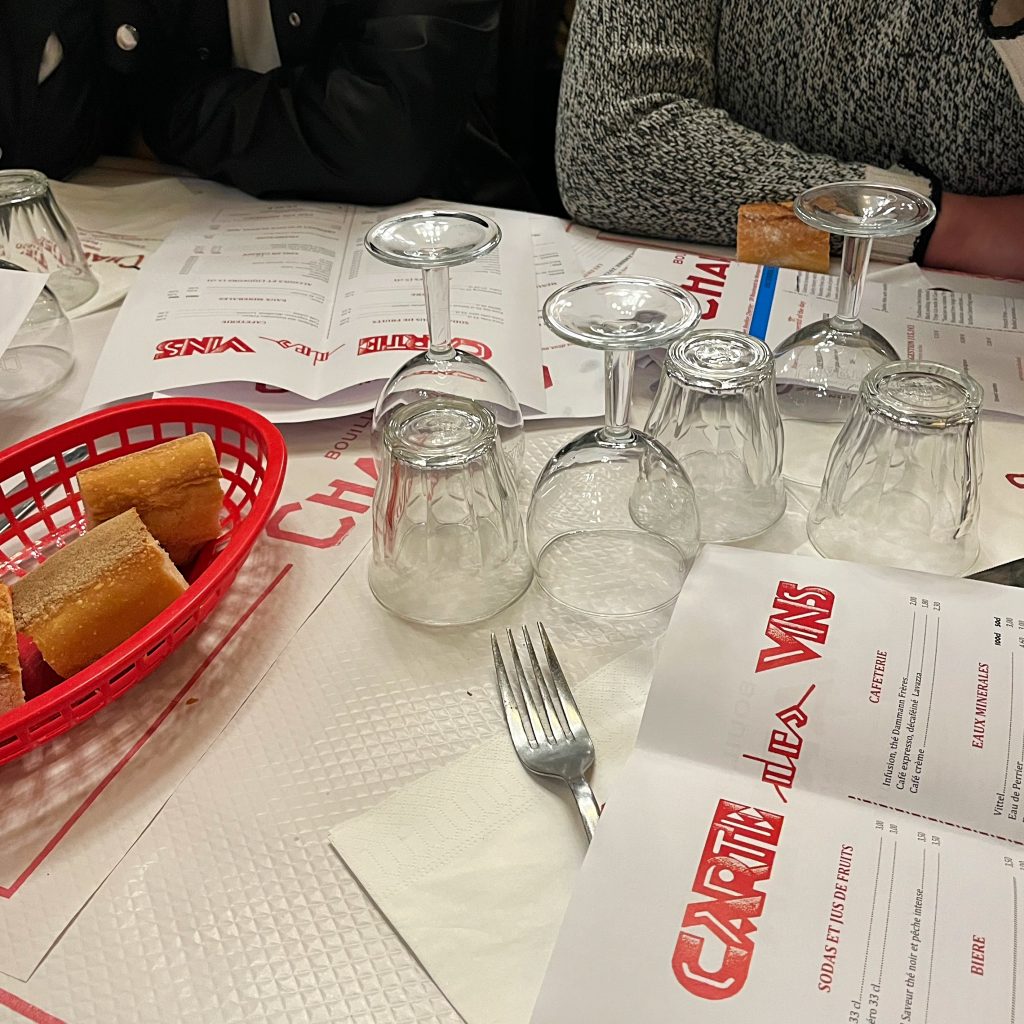
Starters can begin at just €1, with main courses from €7 and desserts or ice creams starting at €2, offering great value for a modest fare.
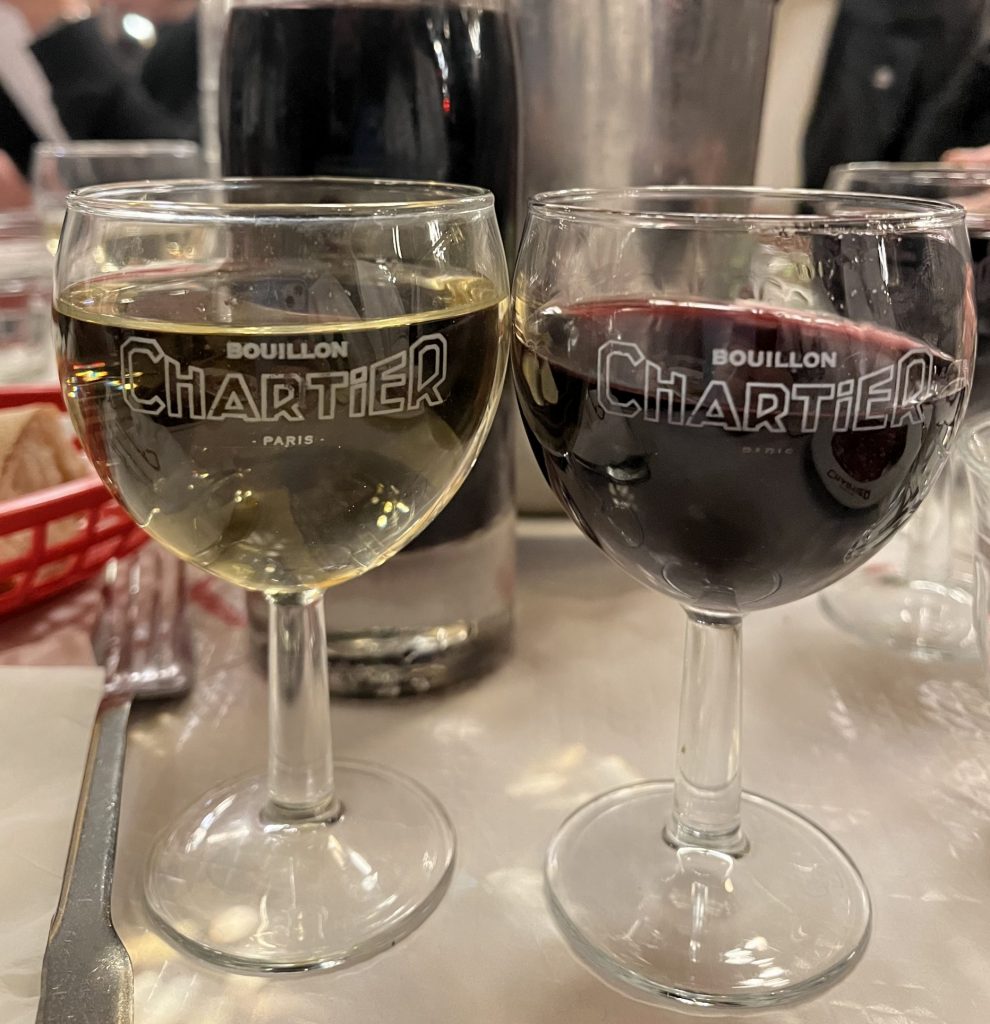
In these establishments a three course meal will cost you about €15-20 (depending on where you go and what you order), and with a 500ml carafe of wine priced at under €4 you can enjoy an authentic French meal (with wine) for the same price as entry to the Louvre.
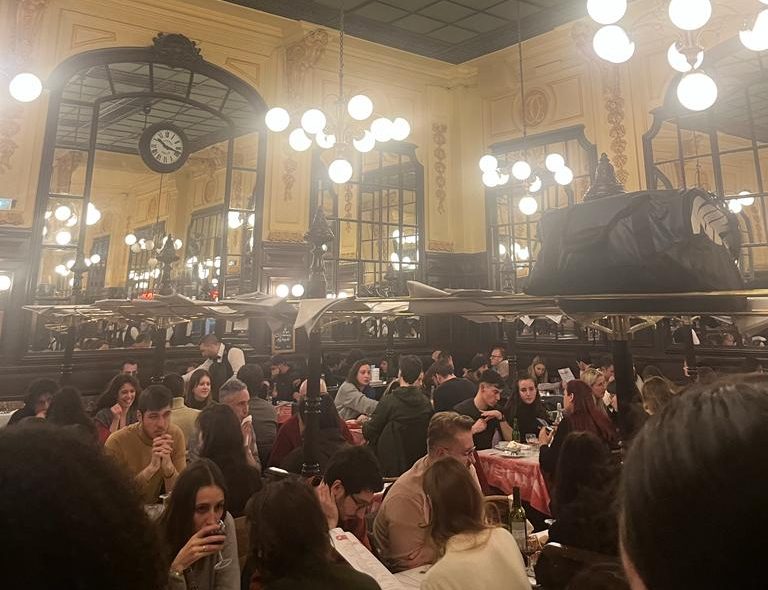
The brasseries serve classic French food, simple dishes like beef bourguignon, steak-frites, escargot, and crème caramel. There’s nothing fancy or pretentious about these places.
You won’t be able to make substitutions or tweak the menu outside of saying how you want your steak cooked. It’s an old-fashioned approach to dining that, oddly enough, feels refreshing in a world full of hyper-customisation.
Even the staff reflect this ‘no-nonsense‘ attitude. You do have to queue outside these bouillons (although I’ve never had to wait longer than 40 minutes and the experience and price is more than worth it), and it doesn’t matter if you’re a party of 7 at the back of the line, and soon as the stern hosts call for a group of your size you’ll be swiftly ushered indoors.
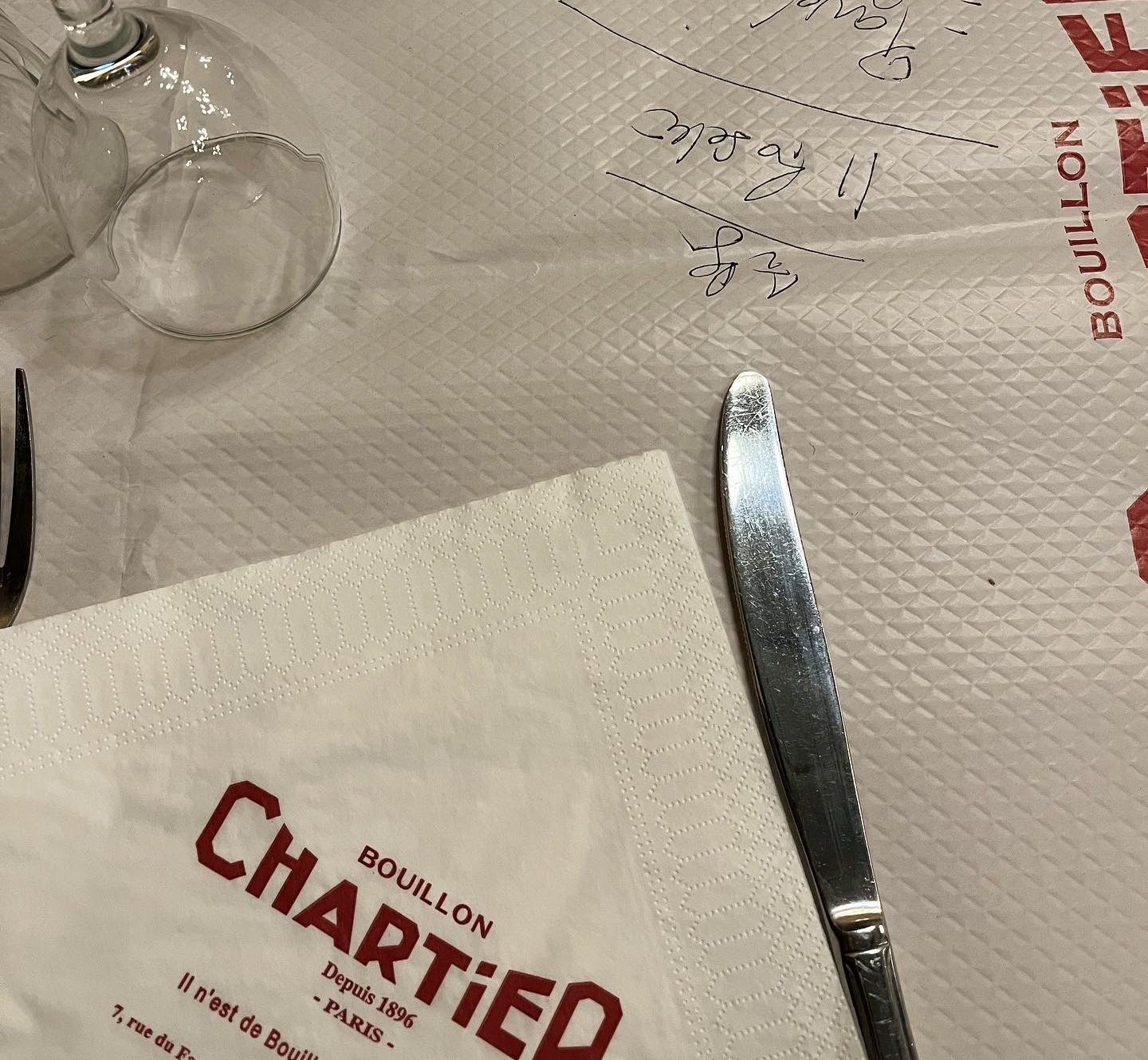
A buzzing, lively atmosphere is set by flurrying waiters in black waistcoats and bow ties, who add up your bill with a quick scrawl on the paper table covers (at Bouillon Chartier).
It’s casual, affordable, and full of charm. They don’t take reservations and are open 365 days a year from 11:30am to midnight. Bouillons pride themselves on constant, no-fuss service.
It’s all about efficiency, which is one of the reasons they can serve so many people each night. I’ve personally been seated at a small two-by-two table with a pair strangers more than once.
Bouillons focus on getting as many people in as possible, keeping the energy high and the restaurant running like a well-oiled machine.
The History of Bouillons
The idea of bouillons originated in the late 1800s, with Pierre-Louis Duval opening the first establishment to offer inexpensive, nourishing meals to Parisian workers.
Up until this point, bouillon had been a dish highly coveted by the upper class. Bouillon shops promoted their broth as restorative and sold it to wealthy Parisians who valued its health benefits but also preferred to have lighter evening meals.
The word ‘restaurant‘ itself comes from the French word meaning to restore, and during this period consumers began to take more of an interest in the health benefits of their food as well as just the taste.
Pierre-Louis Duval, a butcher by trade, was somewhat offended by the food waste created from his cheaper meats and offcuts that he couldn’t sell to Paris’s bourgeoisie.
His solution was to open a shop at the Les Halles market in central Paris where he proposed a simple menu to its workers, offering only a broth (a bouillon) made from this cheaper meat.
Needless to say it proved incredibly popular. Duval began expanding his restaurant chain and others quickly followed suit.
By 1900 there were more than 250 bouillons across Paris. Some fancier bouillons even added reading rooms and entertainment for their guests as their popularity progressed.
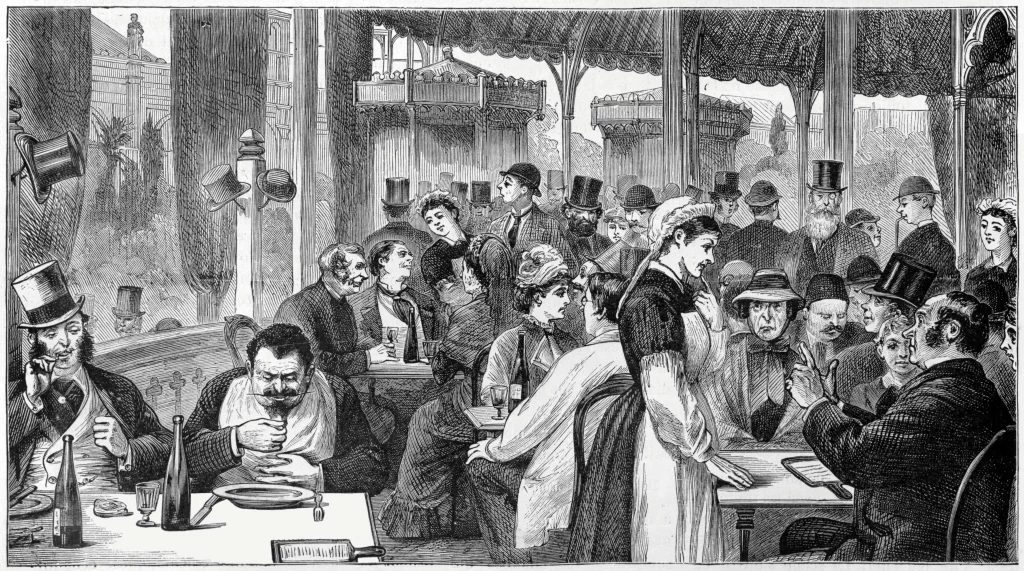
Around this period, whilst poverty rates soared, meat actually became more affordable for the middle and upper classes, leading them to cook at home rather than dine out.
However, with the rise of the Art Nouveau movement in Paris, bouillons transformed their interiors with elegant design such as dark wood, mirrors, and stained glass, which attracted wealthier Parisians back.
These restaurants bridged social divides, offering inexpensive yet quality meals, appealing to both the working and middle classes who would dine side by side nightly.
Bouillons almost vanished during the inter-word-war periods. In fact, in 2017 there was only one bouillon in the whole or Paris, Bouillon Chartier which stood as the lone survivor of a period of near total extinction.
But these eateries have seen a period of strong resurgence in the last 20 years. Their comeback, fuelled by the COVID pandemic aftermath and rising living costs, mirrors their original appeal: affordable, hearty meals in a warm, social atmosphere.
Today, new bouillons are opening across Paris, and even internationally, as people seek budget-friendly dining experiences without sacrificing quality.
I would personally argue that the bouillon is the humble beating heart of Parisian dining.
My Personal Experience
When I lived in Paris I was on a mission to experience the city as much like a local as possible. I had heard about bouillons but didn’t discover them until later in my stay, which now feels like a shame because they became one of my favourite experiences throughout my whole time there.
I went to Bouillon Chartier several times, probably the most famous and centrally located bouillon of them all. I was fortunate enough to live near its location, which is nestled in the 9th arrondissement, an area that is lively, yet still retains its Parisian charm.
There’s always a line outside, sometimes stretching down the street. But don’t let that discourage you. The turnover is quick, and like I said, I never had to wait more than 30 to 40 minutes to get seated.
Sometimes, when it’s particularly cold, they even offer a small glass of mulled wine or a hot drink to keep you warm while you wait, which is such a nice touch.
The queue takes you indoors, past a small gift shop selling branded plates, tea towels, and other fun merchandise; a tongue-in-cheek nod to its tourist appeal.
Once you’re seated, don’t be surprised if they put you at a table with strangers especially if you are a party of 1 or 2. It’s part of the bouillon experience: you share your dining experience with whoever happens to be sitting next to you.
I remember when my dad came to visit me in Paris, and I took him to Bouillon Chartier. He wasn’t convinced at first. The idea of standing in line for a restaurant that he had little knowledge on, taking only my word for its worthwhileness, wasn’t his cup of tea.
But after experiencing the no-fuss service, delicious food, and vibrant atmosphere all whilst sat next to a couple of strangers on the same table, he was completely won over by the Parisian charm.
For 25 euros, we had a three-course meal and a carafe of wine, something that would be nearly impossible in any other major city, let alone in the centre of Paris. He was hooked, just like I was.
One of the things I loved most about Chartier was its interior. When you walk in, you’re greeted by a massive dining room, packed wall to wall with tables and people.
Servers rush around, balancing plates and weaving between dining parties. There’s even an upstairs mezzanine area where you can see people crammed into every available space.
However upon further inspection you realise that the room itself isn’t that big, rather the walls are lined with mirrors, making it feel much larger and more grand.
It was so bustling and atmospheric that on my first visit, as much as it pains me to feel like such a tourist, I remember remarking that I felt like I was in a scene from Ratatouille.
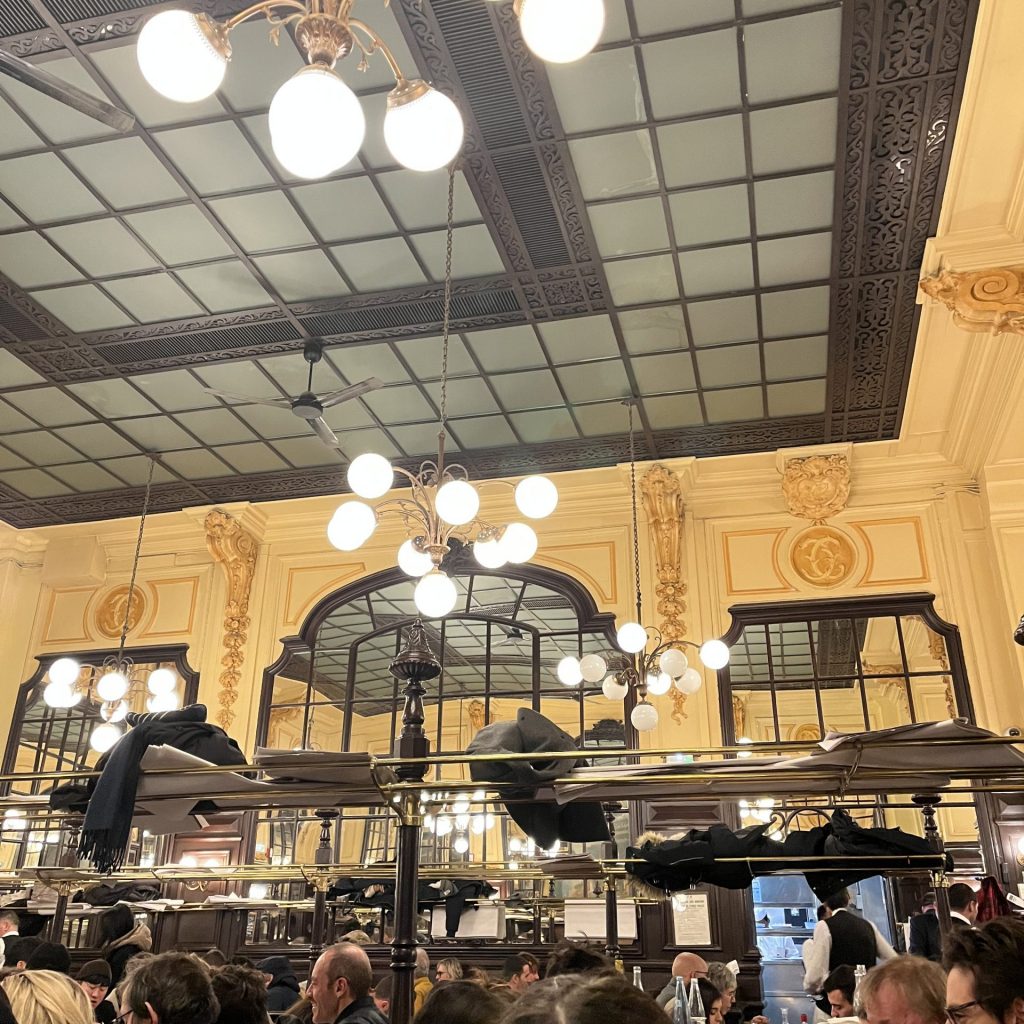
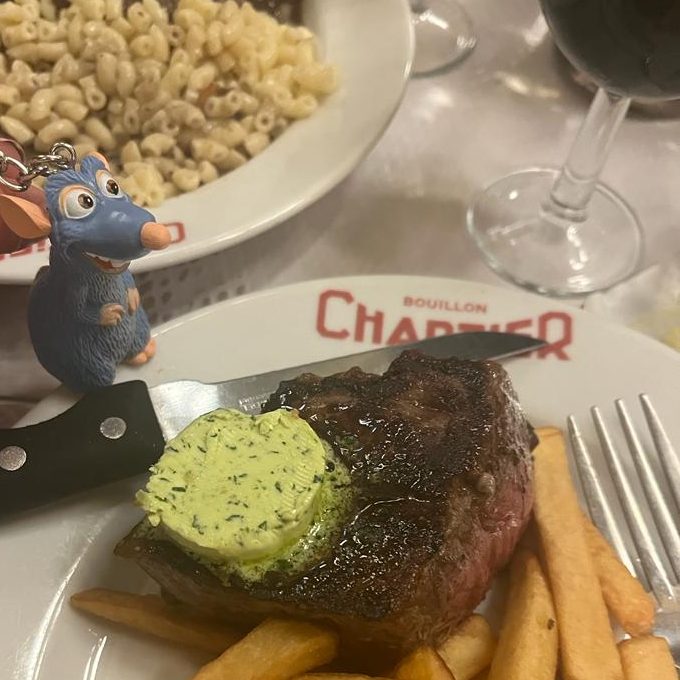
The decor is old and simple, with coat racks where diners toss their jackets before settling in for a hearty meal. There’s a sense of history in the air, and it feels like stepping into another era of Paris.
And if you’re trying to practice your French, it’s a great place to do it. The menu is straightforward and because of the brief, no-nonsense interactions with the waiters you don’t need to speak in lengthy sentences. I speak French and made an effort to order in the language every time. The waiters seem to appreciate it, even though they could tell I clearly wasn’t French, but it just made the whole experience feel a little less like being a tourist.
That being said, if you’re going with a group, word to the wise: splitting the bill can be a bit tricky. Bouillons operate on speed and efficiency, so trying to divide the check among six people might slow things down.
The one time we attempted this, the waiter was understanding, but only because we made an effort to speak French and be friendly with him throughout his service, but his accommodative disposition was not the norm and had been worked on by us throughout the evening.
If you can, it’s easier to pay the bill all at once, settle up with your friends afterward, and enjoy the experience without complicating things.
Where to Find Bouillons in Paris
Paris has a handful of bouillons scattered across the city. Here are a few you should definitely check out:
- Bouillon Chartier (9th arrondissement): Probably the most famous, located in a charming area of Paris. It has a rich history and classic interior that takes you back in time.
- Bouillon Pigalle (18th arrondissement): Known for being in a bit more of a “lively” area near Montmartre, but don’t let that deter you. It offers the same traditional food in a vibrant setting.
- Bouillon Julien (10th arrondissement): This one is more upscale in terms of decor, featuring an art nouveau interior. Still affordable, but a step up in ambiance, the area itself is not as charming but still does the trick. (I lived equidistantly between Julien and Chartier, in fact Julien may have been slightly closer and I still chose Chartier because of the area it was in). Many of my friends loved this one.
- Bouillon République (3rd arrondissement): Centrally located near Place de la République, it’s popular with locals looking for a casual night out.
While these bouillons have their unique characteristics, they all share the same ethos: delicious, simple food served in an unpretentious atmosphere for a fraction of the cost you’d pay elsewhere in Paris.
The Bouillon Experience: Why It’s Worth It
For many visitors, the bouillon experience may sound almost too good to be true. But don’t mistake the affordable prices for low quality. The food at bouillons is genuinely good and the dishes are served quickly. The portions aren’t overwhelming, but they’re just right for a casual dinner with friends.
The vibe in a bouillon is lively, sometimes chaotic, but always convivial. It’s the kind of place where locals and tourists alike gather to share a meal without breaking the bank. Sure, bouillons have become somewhat touristy in recent years, but you’ll still find plenty of locals enjoying their dinner here, especially on weeknights.
Bouillons Beyond Paris: Spreading the Culture
The bouillon concept has even spread beyond Paris. I recently visited a bouillon-style restaurant in Copenhagen, aptly named “BOUILLON” and whilst not quite the same atmosphere, it did still remind me of my time in Paris.
My friends there hadn’t heard of bouillons before, and were but they were instantly hooked by the simplicity, speed, and affordability.
Interestingly, one of them pointed out that this particular establishment was thriving in the post-COVID world as well. As people sought to reconnect with dining out without spending too much, the bouillon concept feels more relevant than ever.
French cuisine is renowned worldwide, but there’s a certain beauty in its simplicity. You won’t find molecular gastronomy or Michelin-starred innovation here. Instead, you’ll find honest, traditional cooking, the kind that has sustained French families for generations.
In a world where tourism in Paris is booming, it’s easy to get caught up in the typical tourist traps. There’s nothing wrong with sightseeing, but if you want a true taste of Parisian life, head to a bouillon.
You’ll eat like the locals, experience the city in a different way, and maybe, like me, find yourself wishing you’d discovered it sooner.
Leave a Reply